
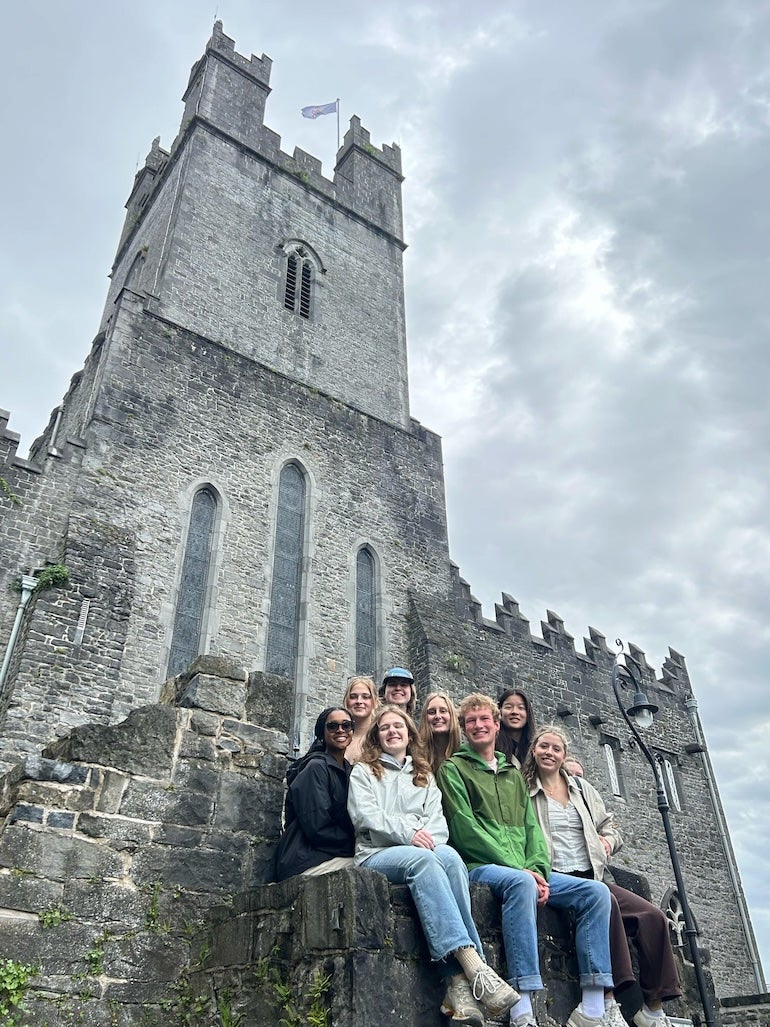
As Ava Cheponis begins her junior year at Rice University, she’s returning to the classroom with more than memories from a summer abroad.
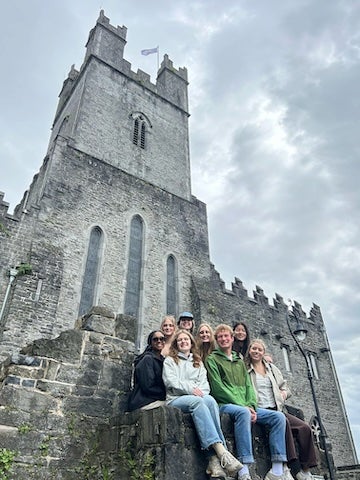
“I think this was one of the best summers of my life,” said Cheponis, who is majoring in both psychology and sport management. “I got to explore a new country, meet people from different backgrounds and experience a totally different culture than what I’m used to in the U.S. I think I became a bit more confident throughout the experience.”
Cheponis spent eight weeks at the University of Limerick in Ireland through a competitive summer research program arranged by Rice’s Office of Study Abroad, conducting research for the first time, navigating life in another country and exploring an academic interest that could eventually become a career.
“I’ve become very interested in the intersection of psychology and sports, and I hope to pursue a career in sports psychology,” Cheponis said. “The University of Limerick, in particular, offered research positions at the intersection of both. The opportunity seemed perfect.”
Rice Study Abroad supported Cheponis through the application process, and a scholarship from the Office of Alumni Relations’ Traveling Owls Program helped make the experience possible.
Cheponis was part of a six-student cohort with each student working on a different research project. Her work focused on an ongoing study examining what motivates adolescents to participate in team sports and how coaches can better support them.
The research was personal for the doctoral student leading the project. As a mother of daughters, she has witnessed firsthand how girls can begin to disengage from sports and wanted to better understand why.
Cheponis analyzed focus group conversations with adolescent girls and boys, comparing what she heard with existing research and identifying themes that could inform the project’s next phase.
One tension emerged around the emphasis on competition.
“A lot of them talked about how their coaches put so much pressure on them that the coaches seemed more focused on winning than the athletes themselves,” Cheponis said. “The athletes were saying, ‘Winning isn’t everything.’”
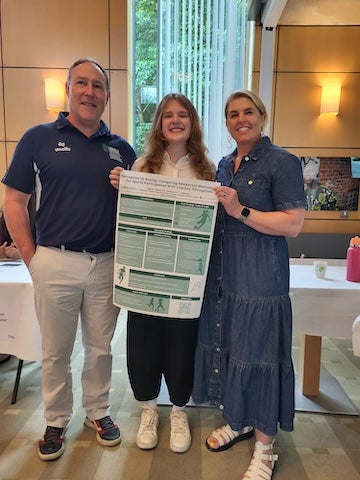
That perspective stood out in a country where Cheponis encountered a sports culture different from the one she knew in the United States. Sports such as Gaelic football and hurling are deeply woven into Irish community life with many young people playing them. Even at the highest levels, Cheponis noted, athletes traditionally play for their communities rather than for a professional salary.
Yet in the focus groups, she heard young athletes describe a familiar pressure to win. For the girls in particular, something else kept rising to the surface.
“The girls in the focus groups kept mentioning the importance of social connection and the friends they’ve made,” Cheponis said. “This idea came up again and again in the literature I read. It was also important to the boys but not as much.”
Understanding those motivations could ultimately help coaches create environments that better support young athletes.
“Participation in sport is about more than just physical activity,” Cheponis said. “For adolescent girls in particular, the social connection in sport can be extremely motivating, building confidence, belonging and identity as well. If coaches don’t understand these different motivations, they may unintentionally create an environment that doesn’t meet their athletes’ needs.”
For Cheponis, digging into those questions also meant learning a different way of conducting research.
Most of her previous experience had involved quantitative research, working with numbers and datasets. In Limerick, she was listening to conversations, identifying themes and considering how people’s experiences fit within a larger body of research.
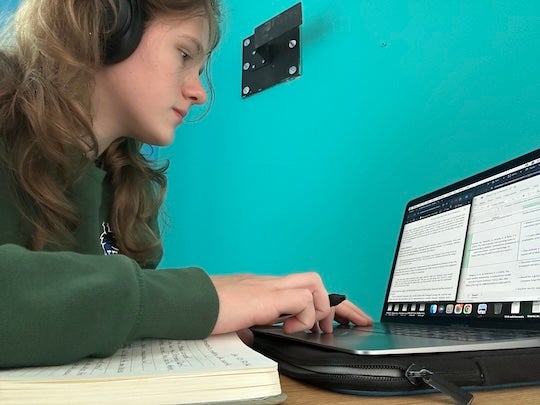
“I learned how to work with focus group transcripts, identify themes, connect qualitative findings to existing literature and think more critically about how we interpret people’s experiences,” she said.
The learning extended beyond the research.
Cheponis had never traveled outside the United States before the summer. In Ireland, she was navigating a new country while adjusting to an academic environment that gave her considerable independence. There were weekly goals and meetings with her research mentors, but she was largely responsible for structuring her days and moving her work forward.
“I became more comfortable being self-directed,” Cheponis said. “I had to manage my time, stay accountable, communicate with my mentors and take initiative when I wasn’t sure about something.”
Cheponis and the five other students in her cohort came from different universities but quickly became close. They balanced their research responsibilities with exploring Limerick and traveling when they had the opportunity.
“We were so lucky to all get along well, and I couldn’t have imagined a better cohort to be with,” Cheponis said. “We had a good mix of keeping each other accountable but also being spontaneous and seizing opportunities to explore Ireland.”
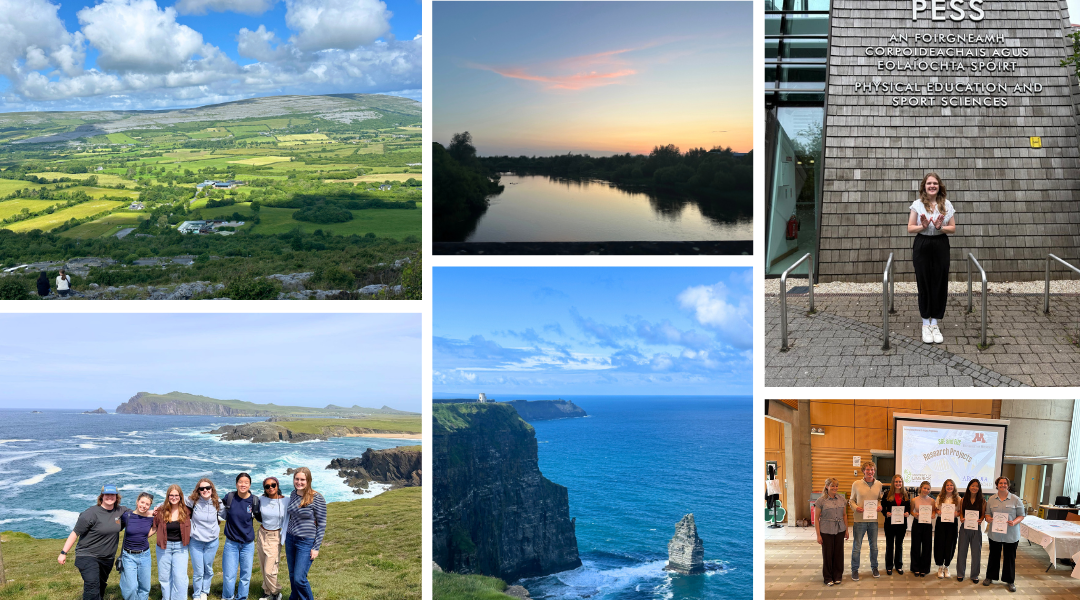
Now, as a new academic year begins at Rice, Cheponis returns with greater confidence and a clearer sense of where her interests might lead.
“It really reinforced my interest in sports psychology,” Cheponis said. “Before this experience, I knew that I was interested in the intersection of psychology and athletics, but this gave me an opportunity to actually explore that interest through research.”
She also returned with a different perspective on what studying abroad can look like.
“Doing research abroad gave me the opportunity to actually contribute to a project and develop skills that I can carry forward academically and professionally,” Cheponis said.
For other students considering an opportunity abroad, her advice is simple.
“Say yes! Do it!”