
The election was over, but the questions were just beginning.
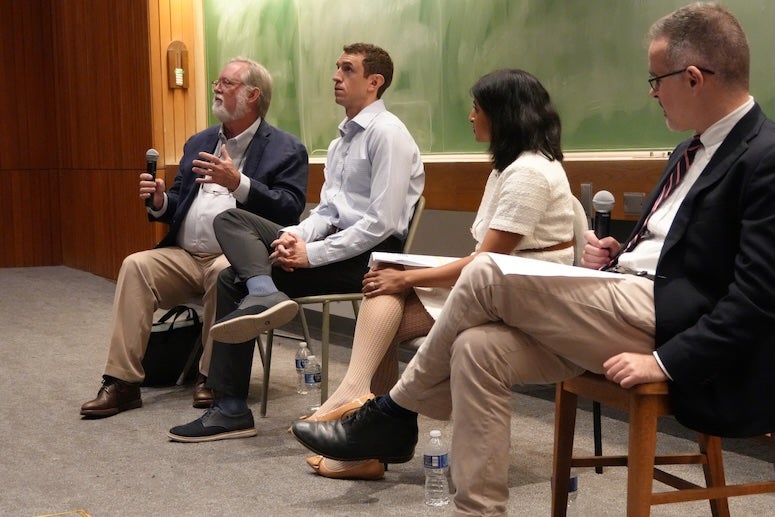
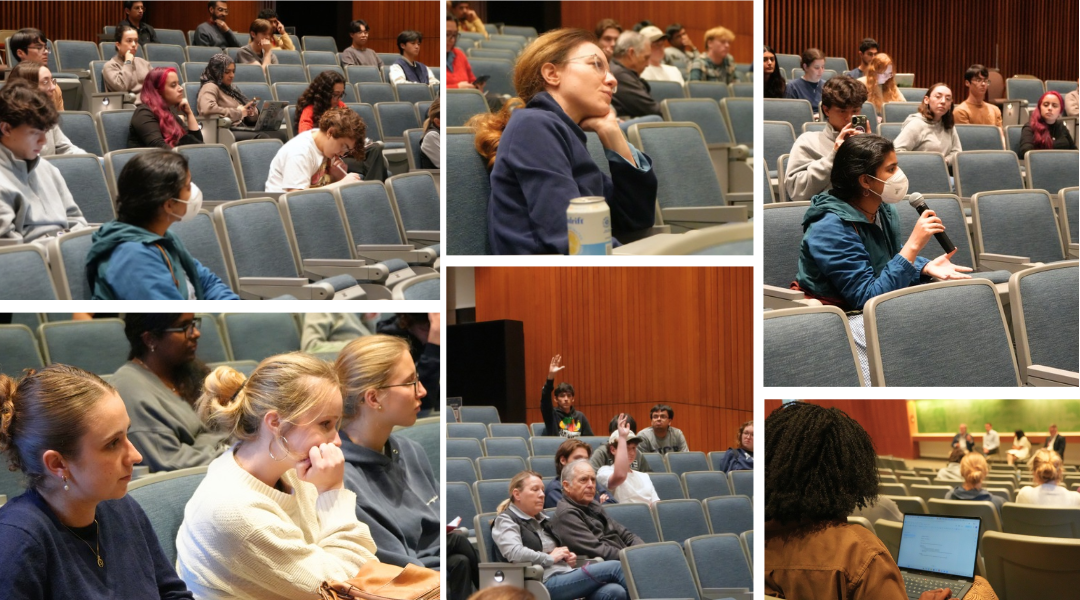
Inside Sewall Hall at Rice University, about 50 students and faculty gathered Nov. 11 to make sense of a midterm election that had challenged political expectations, particularly in Texas.
Were voters changing their political allegiances, or did different voters simply show up at the polls? And what would the results mean for the next two years in Washington?
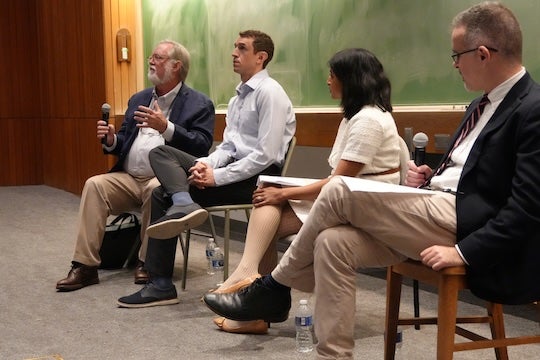
Those questions fueled a lively discussion hosted by Rice’s Department of Political Science, where professors John Alford, Kenneth Lowande and Tanika Raychaudhuri examined the 2026 midterm elections. Professor Alec Arellano moderated the panel, which drew an engaged audience and numerous questions about the political landscape.
For Alford, one of the biggest lessons from the election was the importance of voter turnout.
While early analyses suggested shifts in support among several demographic groups, Alford cautioned that those numbers do not necessarily mean individual voters switched parties. Instead, he suggested the results may largely reflect changes in who participated.
“It’s almost pure turnout effect,” Alford said.
He explained that the results challenge conventional thinking about predicting elections in an era of partisan calcification, when political loyalties have become increasingly entrenched.
“It’s really not about predicting who goes what direction. It’s who actually turns out,” he said.
Alford also pointed to an unusual voting pattern in Texas, where participation varied across individual races. Some voters cast ballots in certain contests while skipping others, illustrating that election outcomes can depend not only on who shows up but also on which races they choose to vote in.
Raychaudhuri, whose research examines race, ethnicity and political behavior, said understanding the results requires looking more closely at individual demographic groups.
“I think it really depends on what group you’re looking at, and the explanation is different for different groups,” she said.
She pointed to Latino voters, who research suggests are less likely to have strongly developed partisan attachments and less likely to vote consistently from one election to the next.
While Latino voters as a group have generally favored Democrats over the years, Raychaudhuri noted that their support has shifted somewhat toward Republicans in recent election cycles. But she cautioned against interpreting those changes as evidence of a fundamental shift in political loyalties.
“It’s hard to say whether these differences represent differences in who’s turning out or actual changes in people’s vote choices,” she said.
Lowande urged caution about drawing sweeping conclusions from early election results, particularly claims about changing political loyalties among demographic groups.
He noted that many of those interpretations rely on exit polls, which he described as among the least reliable sources for understanding individual voting behavior.
Instead, Lowande said researchers will need to examine surveys that track the same voters before and after an election. Those studies can help distinguish between changes in turnout and voters who were persuaded to support a different candidate.
He also pointed to detailed individual voter data that could provide a clearer picture of participation patterns in the months ahead.
“Right now, I think it’s anybody’s guess how much of this is about durable shifts in demographic groups, how much it is about persuasion, how much of it is about turnout,” Lowande said.
The conversation also turned toward Washington and the challenges of governing with a divided Congress and White House.
Lowande predicted the division would make passing major legislation difficult, with the president’s veto power and Senate rules limiting what Congress could accomplish.
Throughout the discussion, students raised their hands to ask questions about the election results, shifting political loyalties and what the outcome could mean for the country.
Among those listening was Rice senior Mikaela Baires, a philosophy and political science major with a minor in legal studies who voted in the midterm election and wanted to better understand the results.
“I read the news, I read the paper,” Baires said. “I wanted to see an academic point of view.”
For Baires, the discussion offered something beyond the daily headlines: an opportunity to hear directly from researchers who study the political forces shaping the country.
“Seeing these professors and professionals in the area just come together and explain to us, you know, younger voters, the importance of this midterm election, the importance of voting period, I think it’s invaluable,” she said.