
Fifty years ago, a Rice University study helped lay the groundwork for an ambitious idea: What if the institutions, neighborhoods and businesses along Houston’s South Main Corridor worked together to shape the area’s future?
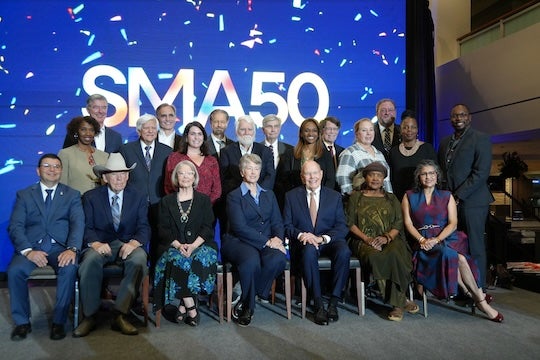
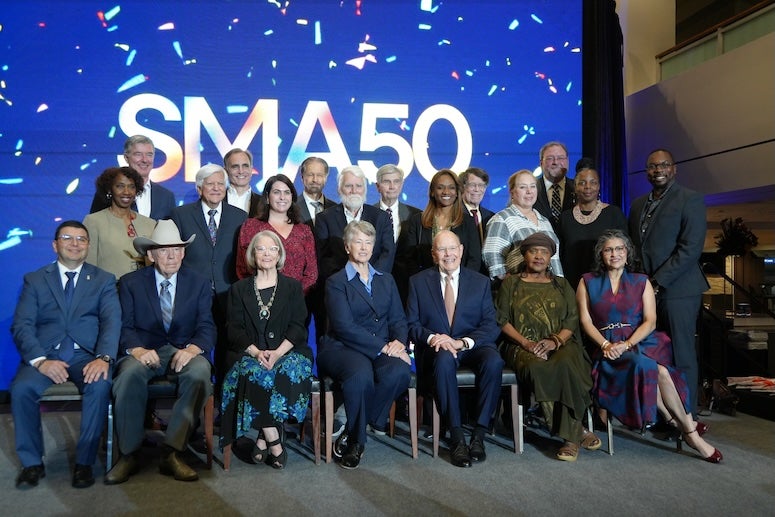
That vision helped launch the South Main Alliance in 1976. Five decades later, the organization is celebrating a legacy of collaboration that has helped transform one of Houston’s most recognizable corridors, home to Rice, the Texas Medical Center, Hermann Park, the Museum District and Reliant Park.
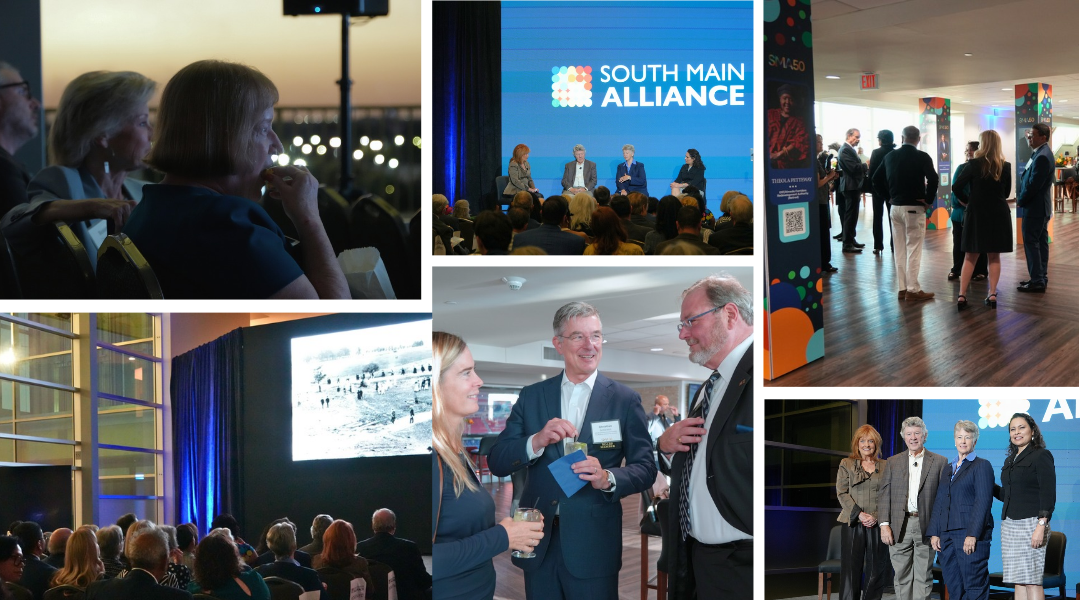
The Alliance marked its 50th anniversary Oct. 20 at Reliant Stadium with the premiere of “Houston’s HEART: The Story of South Main Alliance,” a documentary highlighting the people, partnerships and projects behind the area’s evolution.
The organization traces its beginnings to “Options for a Unique Texas Place,” a study suggested by Rice architecture professor O. Jack. Mitchell and funded by the National Endowment for the Arts that called for a coordinated approach to preserving and enhancing the area’s distinctive mix of neighborhoods, institutions and public spaces.
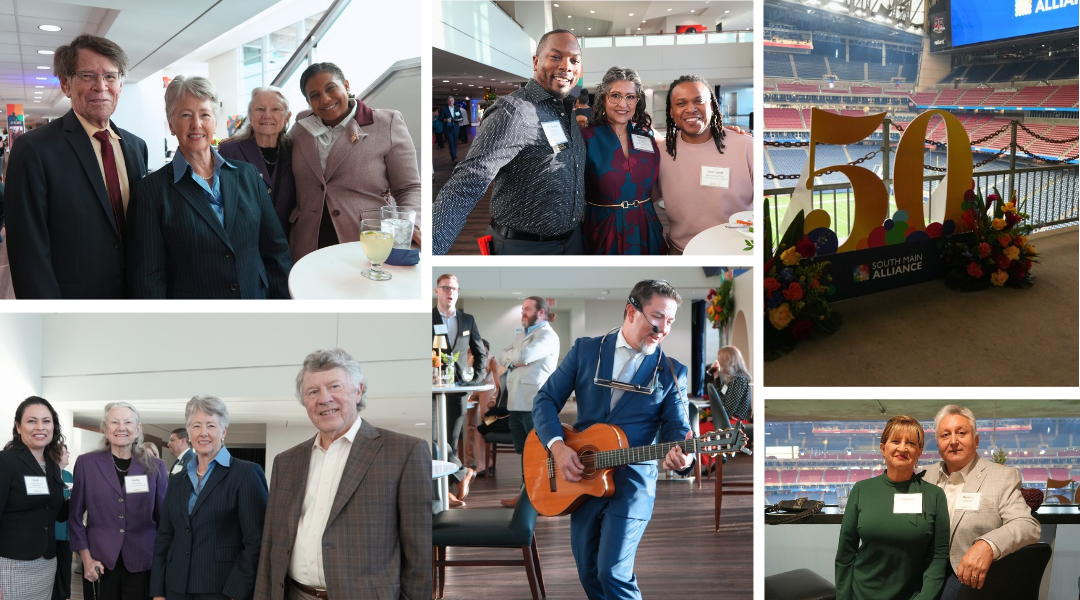
Originally established as the South Main Center Association, the organization brought civic, business and institutional leaders together to address challenges that extended beyond their individual boundaries.
Over the years, those partnerships helped support the establishment and growth of Houston’s Museum District, the founding of Friends of Hermann Park (now the Hermann Park Conservancy), infrastructure improvements and beautification along Main Street and efforts to advance METRORail, pedestrian access and neighborhood preservation. Much of that work happened behind the scenes, bringing organizations with different priorities together around a shared interest in the corridor’s future.
Greg Marshall ’86, Rice’s director of university relations and chair of the South Main Alliance board of directors, opened the anniversary celebration and was among the community leaders featured in the documentary.
Marshall, who received Rice’s 2026 Y. Ping Sun Award for Community Engagement, has spent more than three decades strengthening the university’s relationships with its neighbors.
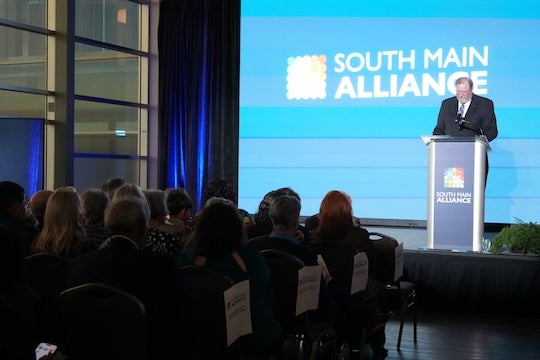
“What happens here affects the health of our entire community,” Marshall said, describing the corridor’s concentration of educational, medical, cultural and recreational institutions.
The documentary offered a look at how five decades of planning, partnerships and persistence helped transform the corridor. But the evening was as much about what lies ahead as it was about how far the area has come.
Following the screening, three Rice-connected leaders turned their attention to the next 50 years. Former Houston Mayor Annise Parker ’78, now a fellow at Rice’s Doerr Institute for New Leaders and professor in the practice at the Jones Graduate School of Business, former Harris County Judge Ed Emmett ’71, a fellow at Rice’s Baker Institute for Public Policy, and Ruth López Turley, director of Rice’s Kinder Institute for Urban Research, joined former ABC13 anchor Shara Fryer for a panel discussion about the corridor’s future.
Emmett, who grew up near the corridor before attending Rice, recalled a neighborhood of grocery stores, restaurants and recreational spaces, many of which have since given way to new development. He pointed to Rice’s transformation of the former Sears building into the Ion innovation hub in Midtown as an example of the area’s ability to reinvent itself.
“As you saw in the film, South Main Alliance has this ability to get people together on neutral turf,” Emmett said, noting the organization’s role in helping institutions and government leaders navigate competing interests.
Parker emphasized that the corridor’s success has depended on more than investment and development.
“It is the power of relationships,” she said, pointing to philanthropy and a willingness to think beyond individual institutional interests. She also stressed the importance of protecting surrounding neighborhoods as the corridor continues to grow.
For López Turley, those relationships are equally important to Rice’s research mission.
She reflected on the legacy of Rice sociologist Stephen Klineberg and the Houston Area Survey, which has tracked the region’s changing attitudes and priorities for more than four decades. That work continues through the Kinder Institute, where researchers study issues ranging from population growth and housing to transportation and community well-being.
“All of our research is aiming to serve our community, to inform our community’s efforts to improve lives,” López Turley said.
She noted that while Houston’s economic strength and diversity remain important assets, slowing population growth, changing development patterns and growing demand for walkable communities present new challenges.
As the panel looked toward the next 50 years, the discussion turned to infrastructure, neighborhood preservation and the importance of engaging younger generations in civic leadership.
López Turley said the Kinder Institute will continue studying those changes and providing research to help community leaders make informed decisions.
As the South Main Alliance looks toward its next 50 years, the challenges may be different, but the mission remains familiar: bringing people and institutions together to make the South Main Corridor a place where Houston can continue to grow and thrive.
For Rice, it’s a vision that began with a university study five decades ago and continues today through research, community partnerships and leadership that reaches well beyond the hedges.