
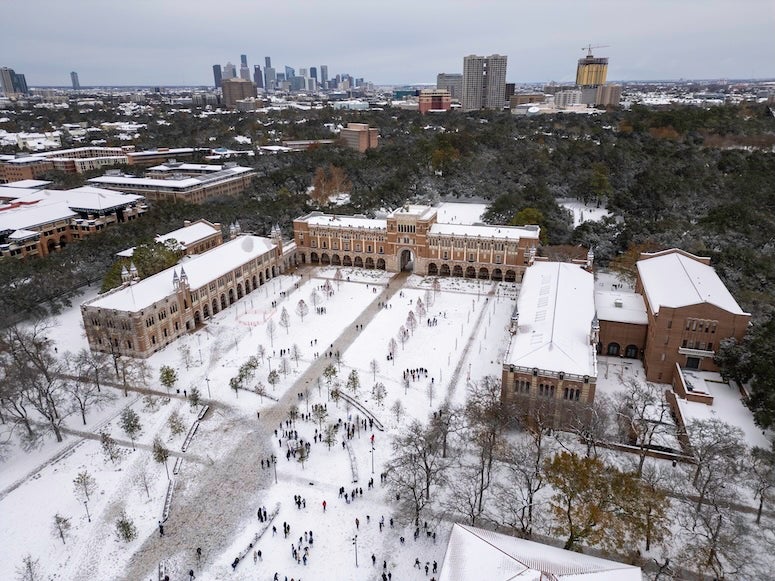
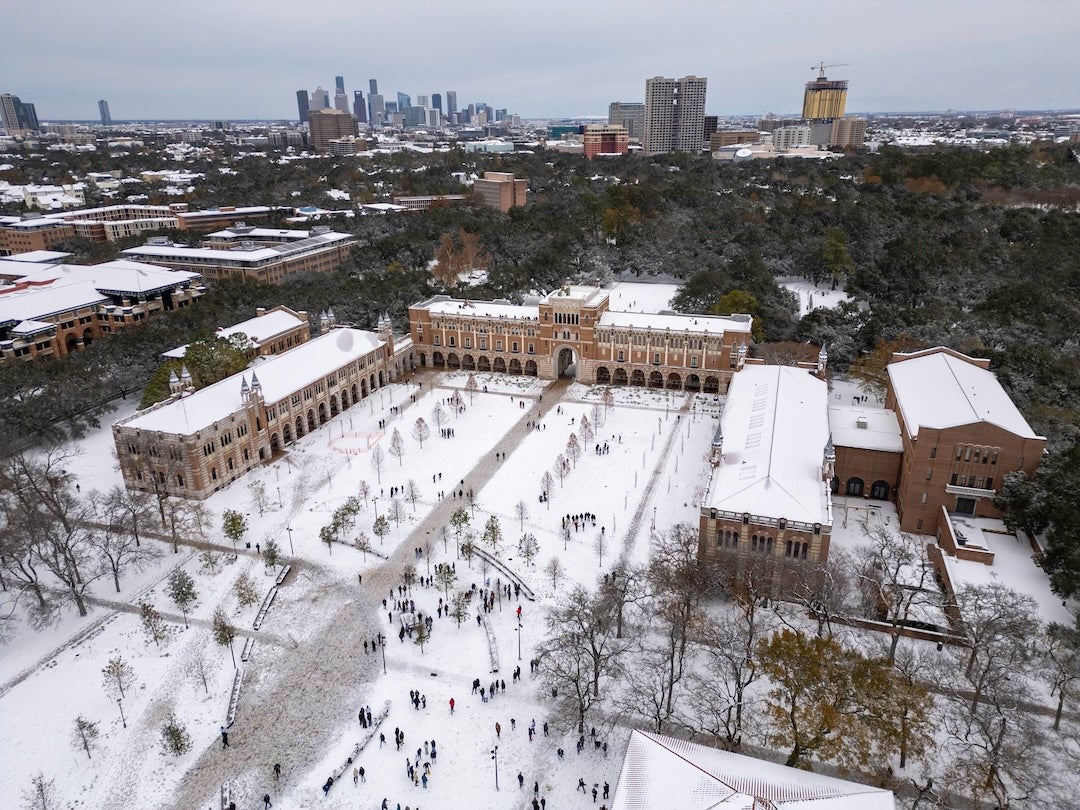
(Photo by Gustavo Raskosky/Rice University)
With La Niña conditions pointing toward a warmer, drier winter across Texas and much of the United States, experts say the outlook may appear reassuring but the season still carries real risks for the region’s energy systems.
Rice University anthropologist Dominic Boyer, who studies energy transitions, climate adaptation and infrastructure resilience, says that while La Niña generally reduces winter storm threats, Texas has been blindsided before by sudden, erratic polar plunges, the kind of extreme cold snaps that have disrupted the state’s grid in recent years.
“Although the rapid development of energy storage in the ERCOT grid has definitely reduced the risks of a repeat of the near collapse we saw during Winter Storm Uri, we’re not necessarily out of the woods,” Boyer said. “Electricity demand is up 23% since 2021, some of the fastest demand growth in the country, which is creating supply pressures. And climate destabilization may bring even greater weather challenges our way in the future.”
Boyer notes that climate change is increasingly destabilizing seasonal patterns, creating winters that are mild on average but punctuated by sudden extremes, a scenario that complicates grid planning, energy demand forecasts and community preparedness.
Boyer can discuss:
- How La Niña shapes winter weather across Texas and the U.S. and what it doesn’t protect us from.
- Why sudden polar air outbreaks remain one of the biggest risks to the Texas grid.
- How climate change creates unpredictable winter patterns despite overall warming.
- Why energy systems designed for “typical” winters are increasingly vulnerable.
- The social equity implications if low-income and historically marginalized communities face another grid disruption.
About Boyer
Boyer is a professor of anthropology at Rice whose work centers on climate change, energy systems, environmental justice and the cultural politics of electrification. A Guggenheim Fellow, he co-directs Rice’s Center for Coastal Futures and Adaptive Resilience and is a leading voice in the field of energy humanities.
To schedule an interview with Boyer, contact Kat Cosley Trigg, media relations specialist at Rice, at Kat.Cosley.Trigg@rice.edu or 713-348-6781.