
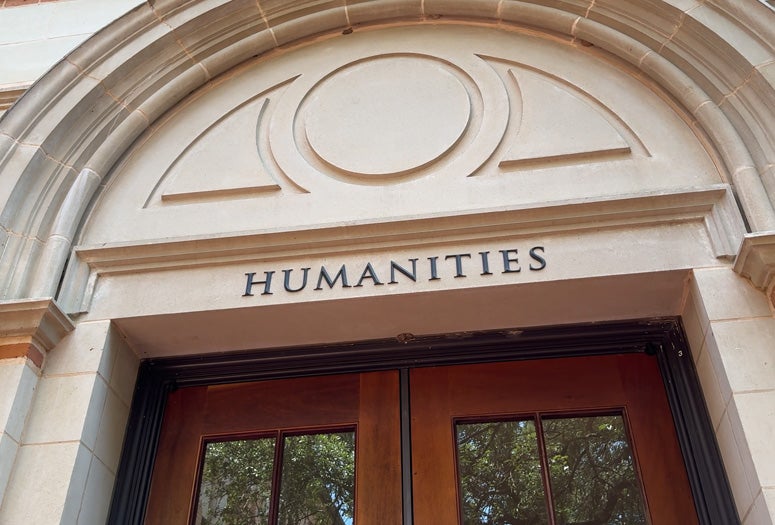
The Rice University Faculty Senate has approved the creation of a new Master of Fine Arts in Creative Writing, marking a milestone for the School of Humanities and Arts and the Department of English and Creative Writing. The result of several years of collaboration among Rice’s creative writing faculty, the three-year graduate program will welcome its first cohort in fall 2026.
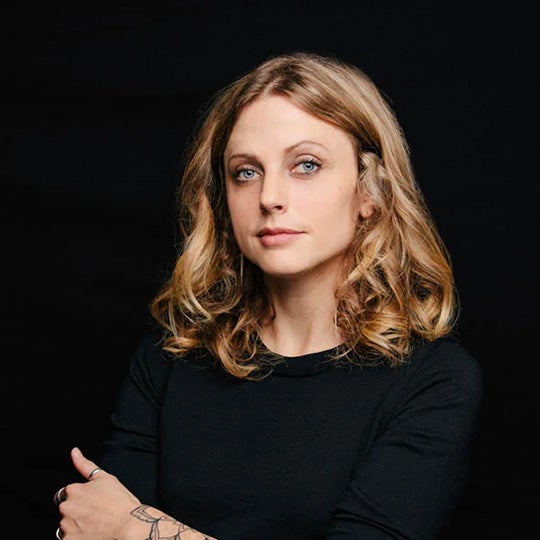
“I salute the opportunity to diversify our graduate training in the humanities to include this new MFA, which is certain to elevate the place of Rice as a national leader in creative writing, while advancing the reputation of Houston as a premier literary and cultural hub,” said Kathleen Canning, dean of the School of Humanities and Arts. “I am confident that this program will quickly gain national visibility as one of the foremost writing programs in the U.S. with an unusual capacity to cultivate a new generation of bold, innovative thinkers and writers whose work is grounded in artistic excellence, interdisciplinary collaboration and community engagement.”
Developed by faculty Lacy M. Johnson, Tomás Q. Morín, Kiese Laymon, Amber Dermont, Andrea Bajani, Ian Schimmel and Justin Cronin, the MFA in Creative Writing is designed to nurture emerging voices in fiction, poetry, nonfiction, translation and hybrid forms while connecting students to Houston’s rich literary and cultural landscape. The program joins a growing suite of degrees including the doctorate in English and major concentration in creative writing, reflecting Rice’s expanding commitment to the arts and humanities.
“The establishment of an MFA in Creative Writing allows Rice to compete with peer institutions offering similar programs while leveraging our unique position as a highly selective research university with a low student-to-faculty ratio and a strong commitment to interdisciplinary innovation,” said Alexander Regier, chair of the Department of English and Creative Writing.
At its core, the new MFA program reflects a belief that writing is a practice deeply connected to how we live and think — an art that invites collaboration, empathy and imagination. Faculty designed the program to be rigorous, experimental and engaged with the world beyond the page.
“We started by asking what kind of MFA program we would have wanted to attend,” said Johnson, the Bruce and Elizabeth Dunlevie Associate Professor of Creative Writing. “For us, that meant designing a program that prepares writers to create meaningful work in and with their communities, not just in isolation at a desk.”
Johnson added that the program’s small size will allow students to “honor all the selves and all the genres they bring to the classroom.”
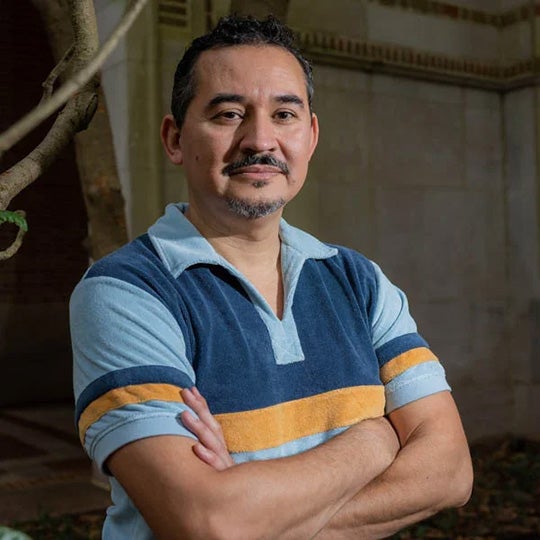
The program will center on small cohorts and close mentorship with Rice’s award-winning faculty. Courses will emphasize experimentation and interdisciplinarity, allowing students to move between genres and collaborate with artists, musicians and scholars across the university.
A key feature of the program is its public-facing mission, expressed through community writing residencies in which students partner with Houston-based nonprofits, schools and cultural institutions. These experiences are designed to teach students how storytelling can serve as a tool for empathy, advocacy and change, while giving Houston organizations new ways to tell their own stories.
“We’re picturing those residencies with an understanding of what narrative can do for organizations, for causes, for efforts to make a difference,” Johnson said. “We want to train students to carry the craft of storytelling — empathy, interviewing, narrative writing — into those organizations to help them tell the stories of the communities they serve.”
“Writing is interdisciplinary because at the end of the day it’s communication,” said Morín, poet, translator and associate professor in creative writing. “Whether you’re a neurobiologist, a sculptor or a writer, we’re all trying to communicate meaningful things in different ways.”
Translation will also play a central role in the new program, reflecting its commitment to connection across languages and cultures.
“For me, translation is getting rid of borders — all the borders that other people try to build,” said Bajani, novelist, professor in the practice and international writer in residence. “It’s political and existential because there’s nothing like translation that is based on empathy. It’s the most empathetic act we can do, trying to be in contact with another person and feel what they felt while writing.”
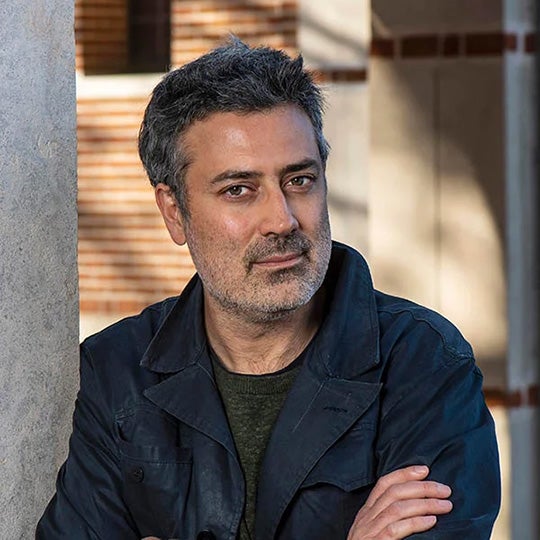
Bajani called translation “an education to difference, a tool for knowledge and cultural exchange that breaks down borders and invites connection.”
“Translation is creation,” Morín said. “It’s where research meets imagination and creativity, and it’s the most pure form of close reading that you can do.”
While the program will prepare students for a wide range of literary and professional paths, faculty emphasize that its goals extend beyond career outcomes.
“We want to send people into the world who deeply believe in the power of the imagination to change lives — not just in literature but socially and politically,” Morín said. “Whether they publish or not, that belief and the practice of it is what matters most.”
Johnson agreed that success will not be measured solely by students’ published works or awards but by impact.
“If 10 years from now we have a network of organizations in many sectors who are hosting writers in residence, who see how narrative shapes the way we understand ourselves and our city, that will feel like success,” Johnson said. “Success will also mean our students find ways to make writing their occupation as well as their craft and vocation. And when we start to talk about the literature of the Gulf Coast and we mean a new generation, that will feel like success, too.”