
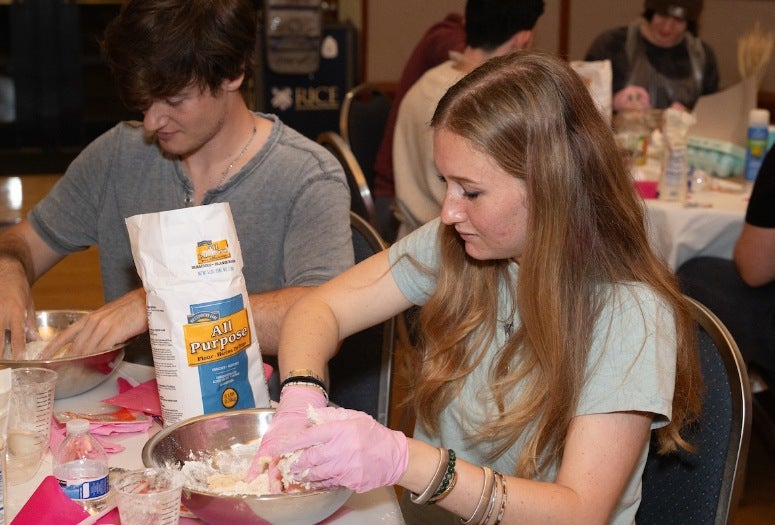
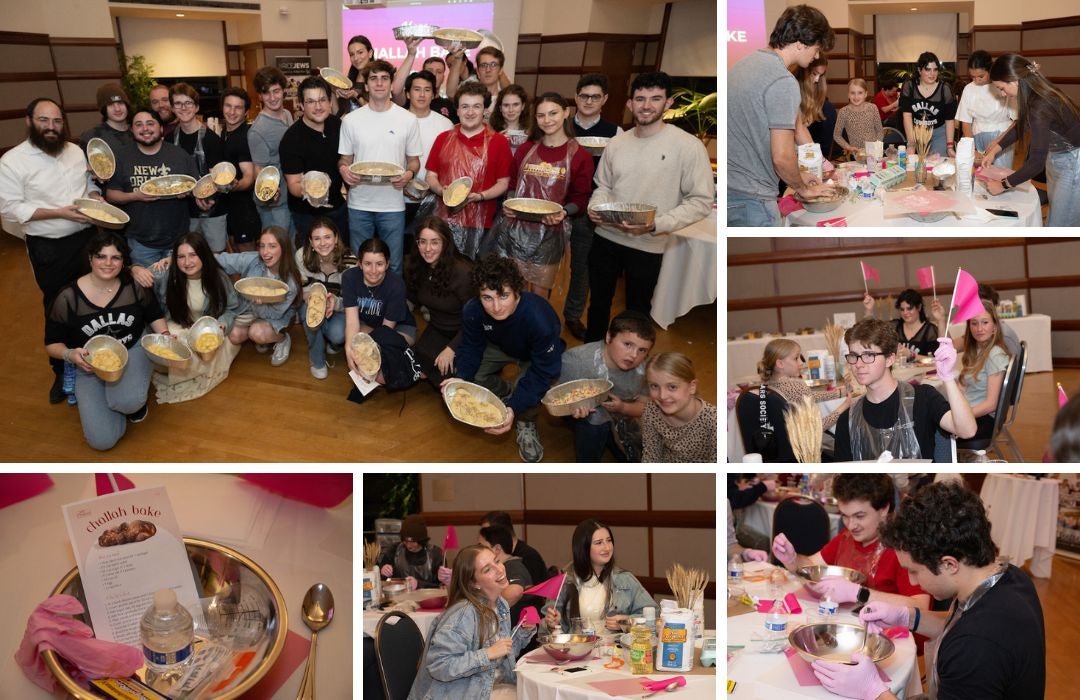
Just before Thanksgiving break, warmth and laughter filled Farnsworth Pavilion as Chabad at Rice’s co-directors Rabbi Shmuli and Nechama Slonim welcomed students for the third annual Mega Challah Bake. It was a night of flour-dusted hands, spirited games and a deeper look at the meaning behind one of Judaism’s most beloved foods.
Aprons went on, yeast was mixed and bowls thumped against tables as students kneaded, compared textures and helped each other along. Icebreaker games set a lively tone while a feeling of community filled the room.
Freshman Jake Pessin, from Los Angeles and studying sports medicine, attended the event for the first time.
“It’s been amazing,” Pessin said. “I’ve had a lot of time to chat with fellow Jews, get to know my peers and talk to people I’ve never met before. It was the first time for me to make challah, so it was fun to experiment — lots of pounding and messing with the dough. We made it work.”
Why ‘challah’ is really called challah
Nechama took a few minutes to explain the deeper significance of what they were creating.
The braided loaf enjoyed at Shabbat meals is commonly called challah, but its name has a much older origin.
“What really makes something challah is the act of taking off a piece of dough from the batch and separating it, and we make a blessing on that,” she said.
That separated piece, once given to the Temple kohanim (hereditary Jewish priests), is what halachic texts call challah. Over generations, the name transferred from that small, consecrated portion to the entire loaf.
Though the separated dough may not always be given to priests, the ritual persists. The separated dough is burned, and the moment becomes a symbolic reminder of giving, gratitude and humility.
Nechama also pointed out that the dough is made from basic ingredients like flour, eggs, oil and water, and it is transformed into challah. In parallel, she pointed out that people should give thanks to the others who helped them to achieve their successes — whether it be in material wealth, a career or otherwise — and that there is a level of blessing that was present to aid in that transformation.
Dough as symbolism and charity in action
According to the Jewish faith, dough itself symbolizes material wealth.
“Everything that we have, we always have to set aside a part of that and give to someone else,” she said.
Tables included blue charity boxes with coins, and each student was invited to give before separating their dough — connecting the ancient practice to modern generosity.
She invited students to reflect before making the blessing.
“When we bless the challah, it’s a very potent moment of prayer,” she said. “Take a moment to think about whatever is on your mind — gratitude, hope, anything.”
Challah as memory, tradition and taste
For Pessin, challah is a taste of home.
“My mom makes it; my grandma makes it; we have our own family recipe,” he said. “It’s been a tradition in my family for many years.”
For sophomore Gabi Brent, a cognitive science major at Brown College, challah is woven into weekly tradition.
“It’s this delicious, slightly sweet, eggy bread,” Brent said. “On Friday nights growing up, we had salmon, challah, salad and wine or grape juice. We said a few blessings and then had a nice family dinner. It’s a weekly chance to bring everyone together, and leftover challah is perfect for French toast the next morning.”
Brent admitted he didn’t know much about the ritual origin of challah until the workshop.
“The teaching about tearing off a part of the dough — that was new to me,” he said. “Every time you go to Chabad, you’re learning something new.”
Games, braiding and toppings
Once dough was set aside to rise, the night shifted into games. Students passed “the parcel,” unwrapping layers of surprises as music played and stopped. An online round of Jewish-themed Kahoot followed with the winners receiving small prizes.
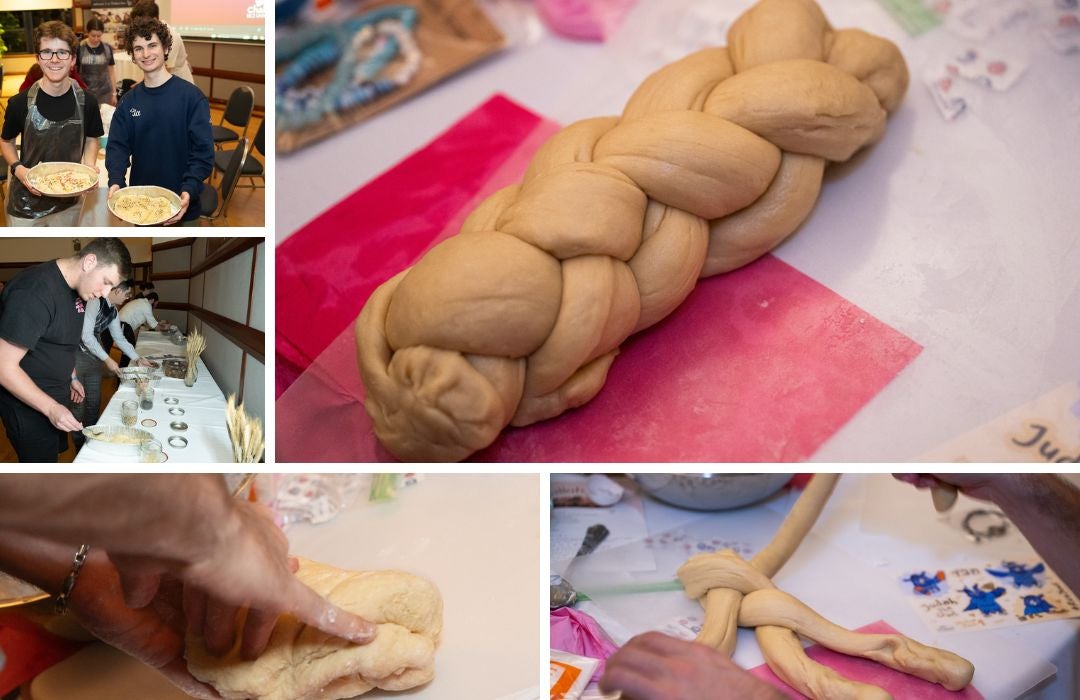
Then came the long-awaited moment: braiding. Students eagerly rolled out ropes of dough. Toppings ranged from sesame to sweet blends to an “everything but the bagel” spice option.
As trays filled with braided loaves, students brushed on egg wash and prepared their creations for baking. Even after handing their pans over, many stayed to chat, share stories and linger in the communal warmth of the evening.
For both new students and those long settled at Rice, the workshop was more than a chance to bake. It was a moment between tradition and modern life.
Rice’s Jewish community will come together again at 4:30 p.m. Dec. 7 for a pre-Chanukah celebration in Ray Courtyard next to the Rice Memorial Center. For more information on Chabad at Rice, visit jewishriceu.com.