

In Houston, art doesn’t just hang on walls. It spills into streets, conversations and communities. That’s the energy that pulsed through the 16th annual Association for the Study of the Arts of the Present Conference (ASAP/16), which transformed Rice University and the city itself into a living gallery of collaboration.
From Oct. 22-25, more than 500 scholars, artists and curators filled lecture halls and galleries from the Museum of Fine Arts, Houston to Project Row Houses, exploring how the arts shape the present moment and how cities like Houston can help define it. Panels ranged from “Speculative Archives and the Future of Memory” to “Art and Extraction,” highlighting how artists and scholars are grappling with questions of sustainability, history and the imagination’s role in rebuilding collective memory.
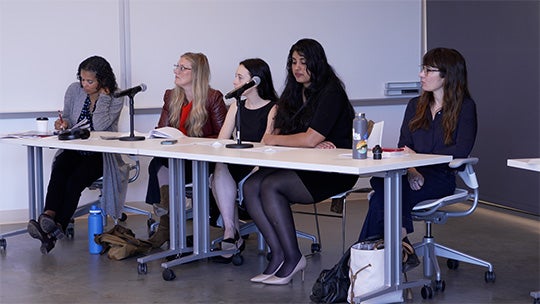
“This seems like the perfect institution to host ASAP because of ASAP’s commitment to the intersection of the critical and creative,” said Michael Dango, associate professor of English and director of the Program in Media Studies at Rice.
The conference was co-chaired by Dango and Hayley O’Malley with support from assistant professor of art history Olivia K. Young and graduate student Tara Oluwafemi. With the support of the Terra Foundation of American Art, they built a program that emphasized connection between disciplines, institutions, Houston and the wider world.
“We’re really showing that artistic production is itself a kind of research and that we want to have folks who are on the critical study of art also be in conversation with those who are making art and vice versa,” Dango said.
Throughout the conference, that dialogue took tangible form across Houston. Keynotes and performances came to life in collaboration with major arts institutions and neighborhood spaces alike, reinforcing the idea that contemporary art thrives on connection, not isolation. Seminars such as “Theorizing the Contemporary Stage” and “Ecologies of the South” drew artists and academics into shared discussions of performance, landscape and the ethics of artistic practice. At the Museum of Fine Arts, Houston, attendees gathered for a film screening followed by a conversation with the filmmakers; at the Contemporary Arts Museum Houston and Project Row Houses, they found community-rooted practices expanding the very idea of where art lives.

“We’re excited for Rice to be in conversation with all of Houston,” said O’Malley, assistant professor of art history. “A key part of this conference is that, yes, it’s happening here at Rice, but it’s also happening throughout the city of Houston.”
O’Malley noted that the partnerships ranged from “big museums to more grassroots organizations,” all working together to demonstrate that “Rice, and Houston as a whole, is a hub for thinking about contemporary arts and culture.”
The Gulf Coast Arts Showcase, an ongoing exhibition of artists from Houston and New Orleans, served as one of the conference’s emotional centers. By spotlighting regional artists alongside international academics, it invited cross-pollination and served as a reminder that the “study of the arts of the present” depends on who gets to define that present.
“We’re really excited to provide a platform for artists to share their work and talk about their practice,” O’Malley said.
The event also included a book fair featuring work by ASAP members and speakers, a gesture Dango described as a way to keep conversations alive after the conference.
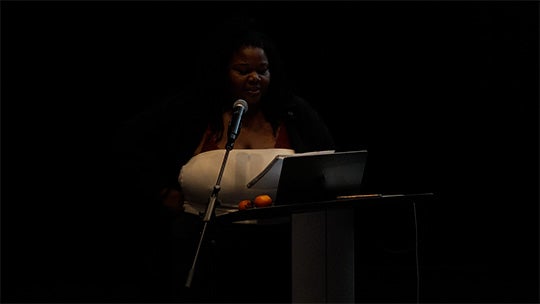
“Being able to peruse those titles after you’ve had a really inspiring conversation, perhaps with that author in a panel or in a seminar, allows the experience of the conference to go home with you,” Dango said.
In a year when the arts continue to battle shrinking budgets and shifting cultural priorities, Dango said the act of gathering itself felt defiant and essential.
“It’s really important to come together as a community to really forward the arts and show the ways that they are providing some maps for us to build a world together,” Dango said.
O’Malley echoed that sentiment, describing ASAP/16 as a place where new artistic and academic networks could take root.
“The goal of this conference is to provide a space for community building, to allow grad students to meet faculty whose work they admire, for academics to connect with artists,” O’Malley said.
The written reflections and analyses that emerge from the conference will extend those conversations even further, appearing in a forthcoming issue of ASAP/Review and ensuring that the ideas sparked across Houston’s museums, classrooms and neighborhoods continue to circulate well beyond them.