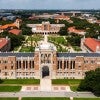
Rice’s online graduate programs earned significant gains in the latest U.S. News & World Report Best Online Programs rankings, with strong upward movement across engineering, computing and business disciplines. The 2026 rankings underscore Rice’s growing national profile for delivering rigorous, high-impact graduate education in a flexible online format.
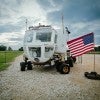
What can AI do for space exploration?
The In-Space Physical AI Workshop to be held Feb. 11-12 at the Ion will explore the intersection of AI and space exploration.
Training for the future of health care delivery: Rice now offering master’s in digital health
Rice is launching a new master’s degree in digital health, an interdisciplinary graduate program designed to train the next generation of engineer-leaders to invent the future of health care.
Rice computer scientists reach finals in global XPRIZE Quantum Applications competition
Rice quantum computing researchers have introduced a novel algorithm that earned the team a place in the global XPRIZE Quantum Applications competition.
Paul, lead of Rice Nexus, elected to National Academy of Inventors
Sanjoy Paul, executive director of Rice Nexus and AI Houston and associate vice president for technology development at Rice University, has been selected as a fellow of the National Academy of Inventors (NAI)
How AI can help detect disease and accelerate medical breakthroughs
As artificial intelligence plays an increasingly prominent role in decoding DNA, tracking pathogens and accelerating drug discovery, the line between real capability and hype can be unclear. Rice experts can provide clear, technically grounded perspectives on how these tools are meaningfully advancing disease detection, public health preparedness and treatment design.
Engineered randomness enhances connection speed and precision in next-generation wireless systems
Rice researchers and collaborators have developed a way to generate and control radio wave patterns that can identify a signal’s direction about ten times better than existing approaches, paving the way for next-generation wireless systems.
Bhalani, Eldridge to receive Builders Award
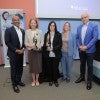
Rushi Bhalani ’19 and Will Eldridge ’16 ’17 will be recognized with the Builders Award Nov. 7 during the President’s Town Hall, a signature event of Rice’s Alumni Weekend. The Builders Award is given to graduates of the past 10 years who go above and beyond in service to Rice.
Algorithm maps genetic connection between Alzheimer’s and specific neurons
Rice researchers and collaborators developed a computational tool that can help identify which specific types of cells in the body are genetically linked to complex human traits and diseases, including in forms of dementia such as Alzheimer’s and Parkinson’s.
Rice's Ken Kennedy Institute hosted the fourth annual AI in Health Conference, convening over 550 attendees across the four-day event for plenary speaker sessions, networking and workshops that explored key areas for artificial intelligence-driven advancement across health and public health domains.
Rice undergraduate builds tool to help NASA scientists monitor microbes in space
Rice junior Ankhi Banerjee spent 10 weeks over the summer building a data-analysis pipeline to help NASA Johnson Space Center scientists track microbes aboard the International Space Station.
Rice algorithms take on quantum adversary
Rice computer scientists have developed algorithms that account for quantum noise that is not just random, but malicious interference from an adversary.
Rice research team on quest to engineer computing systems from living cells
A Rice research team is on quest to engineer computing systems from living cells.
Rice Emerging Scholars Program prepares first-year students for STEM success
Rice’s campus was buzzing this summer as students in the Rice Emerging Scholars Program wrapped up six weeks of challenging courses, hands-on projects and community-building. The end-of-program events and presentations marked the culmination of a summer designed to prepare incoming first-year students — particularly those from under-resourced high schools — for the pace, depth and rigor of STEM majors at Rice.
Luay Nakhleh, dean of the George R. Brown School of Engineering and Computing, has received a $1.9 million grant from the National Science Foundation to build a powerful new software infrastructure that could significantly expand how scientists study evolution.